What Businesses Should Know About Deconstruction Opportunities in the Coming Weeks
St Louis, United States – February 7, 2026 / Deconstruction Development Partners /
Valensi Rose PLC provides the following overview of the deconstruction process and a general discussion of the potential federal charitable contribution tax considerations associated with the donation of salvaged building materials to qualified nonprofit organizations.
At the request of Deconstruction Development Partners, LLC, this overview addresses the process commonly referred to as “deconstruction” and outlines the general Internal Revenue Code provisions that may apply to noncash charitable contributions of building components recovered through that process and donated to organizations exempt from federal income taxation under Section 501(c)(3) of the Internal Revenue Code.
This discussion is intended to first describe deconstruction as a distinct method of building disassembly and material recovery, and then to summarize the applicable federal tax rules governing noncash charitable contributions of property donated to qualifying charitable organizations. The information presented reflects general principles under current federal tax law and is based on certain factual assumptions described in subsequent sections.
This overview is provided for informational purposes only and is not intended to constitute legal or tax advice, nor to address the tax consequences of any specific transaction.
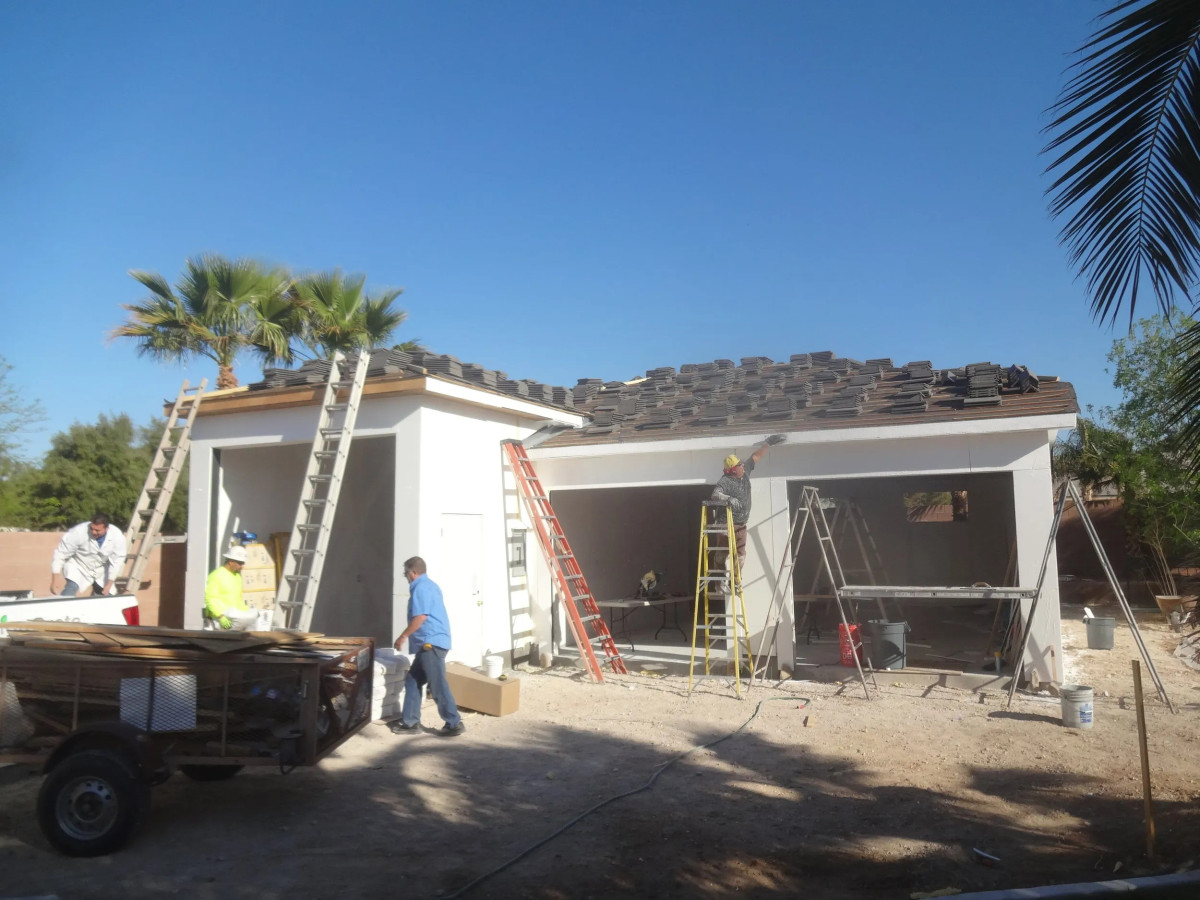
Deconstruction is a method of building disassembly that emphasizes the careful removal and recovery of building components for reuse and recycling.
As described in A Guide to Deconstruction, prepared for the U.S. Department of Housing and Urban Development (HUD) by the NAHB Research Center, Inc., deconstruction is intended to provide an alternative to conventional demolition by prioritizing material recovery and community development opportunities. HUD characterizes deconstruction as a process that may be incorporated into broader public and private initiatives designed to stabilize and revitalize neighborhoods and communities.
According to HUD, deconstruction involves the systematic disassembly of a building, generally performed in the reverse order of construction, for the purpose of preserving building materials for reuse. Unlike standard demolition practices, which typically involve the rapid destruction of a structure with materials sent to landfills or recycling facilities, deconstruction focuses on the intentional removal of components with reuse as the primary objective.
The deconstruction process may extend beyond the recovery of commonly salvaged items such as doors, windows, and light fixtures, and may include materials such as flooring, siding, roofing, and framing. In certain instances, deconstruction can yield materials that are no longer commercially available, including old-growth lumber species such as Douglas fir and redwood.
HUD has further identified deconstruction as an innovative tool that may support public-private housing initiatives, including programs intended to advance next-generation housing development through sustainable and market-accepted practices.
Nonprofit organizations play an integral role in the reuse and recycling of building components recovered through the deconstruction process.
Organizations such as Habitat for Humanity are actively engaged in deconstruction as a means of reducing construction waste while simultaneously generating reusable inventory. As described in A Guide to Deconstruction, Habitat for Humanity affiliates utilize deconstruction to obtain building materials for resale through Habitat ReStores, which operate as nonprofit home improvement retail outlets and donation centers.
The sale of salvaged building components through these ReStore operations generates revenue that supports Habitat for Humanity’s charitable mission, including the construction and rehabilitation of affordable housing for low-income families. Through this model, materials recovered during deconstruction are diverted from landfills and returned to productive use within the community.
This nonprofit participation underscores the connection between deconstruction, material reuse, and charitable activity, and provides the operational framework through which salvaged building components may be donated to organizations exempt from federal income taxation under Section 501(c)(3) of the Internal Revenue Code.
Federal tax law provides specific rules governing the deductibility of noncash charitable contributions, including donations of salvaged building components recovered through deconstruction.
As contemplated under the Donation Benefit Services Program offered by Deconstruction Development Partners, LLC, it is anticipated that clients will have owned the applicable real property for at least one year prior to the selective dismantling of building components through deconstruction. Under these circumstances, salvaged building components may be donated to a nonprofit organization that is exempt from federal income tax pursuant to Section 501(c)(3) of the Internal Revenue Code.
Generally, the amount of a charitable contribution deduction for property other than money is equal to the fair market value of the property at the time of contribution. This general rule, however, does not apply to certain categories of property, including property that would generate ordinary income if sold at the time of contribution, or tangible personal property donated to a charitable organization for a use that is unrelated to the organization’s exempt purpose.
For purposes of this overview, it is assumed that clients participating in the Donation Benefit Services Program are not engaged in the trade or business of dealing in real property, and that the real property acquired is held for the applicable long-term capital gain holding period prior to the donation of salvaged building components. It is further assumed that the nonprofit recipient organization accepts the donated property and uses it in a manner related to its exempt purposes.
Where donated tangible personal property is used by a charitable organization in a manner unrelated to its exempt purpose, the donor’s charitable contribution deduction is generally limited to the donor’s adjusted basis in the property, rather than its fair market value.
Accordingly, for donors seeking a charitable contribution deduction equal to the fair market value of salvaged building components, it is critical that both the donor and the recipient nonprofit organization satisfy the applicable statutory and regulatory requirements.
Federal tax regulations impose specific substantiation and reporting requirements on taxpayers claiming deductions for noncash charitable contributions.
Taxpayers who claim a charitable contribution deduction for property other than money are required to maintain appropriate records supporting the contribution. These requirements vary depending on the value of the donated property and include obtaining contemporaneous written acknowledgments from the recipient charitable organization.
For noncash charitable contributions with a claimed value exceeding $5,000, the Internal Revenue Code generally requires the donor to obtain a qualified appraisal prepared by a qualified appraiser. The appraisal must determine the fair market value of the donated property and must be completed no earlier than 60 days before the date of contribution and no later than the due date of the donor’s federal income tax return, including extensions.
In addition, donors claiming such deductions are required to file IRS Form 8283, Noncash Charitable Contributions, with their federal income tax return. The donee organization is required to complete and sign the applicable portion of Form 8283 acknowledging receipt of the donated property.
Failure to comply with the substantiation, appraisal, and reporting requirements applicable to noncash charitable contributions may result in the disallowance of the claimed deduction, regardless of the fair market value of the donated property.
Accordingly, donors participating in the Donation Benefit Services Program must ensure that all applicable substantiation and appraisal requirements are satisfied in order to preserve the availability of any charitable contribution deduction.
This overview is based on certain factual assumptions and is subject to the limitations described herein.
The analysis provided is based on representations made regarding the structure and operation of the Donation Benefit Services Program, including assumptions concerning property ownership, holding periods, donor intent, and the manner in which salvaged building components are donated and used by recipient charitable organizations. No independent verification of these facts has been undertaken.
This overview reflects federal tax law as in effect as of the date of issuance and does not take into account subsequent legislative, regulatory, administrative, or judicial developments that may affect the conclusions discussed herein. Any such changes could alter the federal tax treatment of the transactions described.
The discussion provided is limited to certain federal income tax considerations and does not address state, local, foreign, or other tax consequences. In addition, this overview does not address non-tax legal considerations that may be relevant to deconstruction activities or charitable contributions.
This overview is not intended to be used, and may not be relied upon, by any person other than Deconstruction Development Partners, LLC, in connection with the Donation Benefit Services Program, and may not be relied upon for the purpose of avoiding penalties under the Internal Revenue Code.
Based on the foregoing discussion and subject to the assumptions, qualifications, and limitations described above, Valensi Rose PLC provides this overview of the general federal income tax considerations related to the deconstruction process and the donation of salvaged building materials to qualified charitable organizations.
This overview is intended to summarize certain aspects of federal tax law that may apply to noncash charitable contributions of salvaged building components recovered through deconstruction, as contemplated by the Donation Benefit Services Program offered by Deconstruction Development Partners, LLC. The availability and amount of any charitable contribution deduction depend on the specific facts and circumstances of each transaction and on compliance with applicable statutory and regulatory requirements.
This overview does not constitute a guarantee of any particular tax result and should not be construed as legal or tax advice to any taxpayer. Taxpayers are encouraged to consult with their own legal and tax advisors regarding the application of federal tax law to their individual circumstances.
What’s Ahead: Deconstruction Opportunities Businesses Should Be Watching Next Week
As interest grows in sustainable construction practices and responsible material reuse, more property owners and developers are taking a closer look at deconstruction as an alternative to traditional demolition. In the coming weeks, businesses involved in redevelopment, renovation, or property disposition may find it timely to evaluate whether deconstruction aligns with their operational and compliance objectives.
Deconstruction involves the careful dismantling of structures to recover building components for reuse or donation to qualified nonprofit organizations. When properly executed and documented, this process can support sustainability goals while fitting within established federal tax rules governing noncash charitable contributions.
Businesses considering this approach should understand that eligibility, valuation, substantiation, and nonprofit use requirements are highly fact-specific and subject to strict compliance standards. Not every project is suitable, and outcomes depend on structure, timing, and execution.
Organizations interested in learning whether their upcoming projects may qualify are encouraged to contact Deconstruction Development Partners, LLC. Their team can help businesses understand the process, review project characteristics, and determine whether participation may be appropriate based on current federal guidelines.
To learn how Deconstruction Development Partners, LLC can help you evaluate your options, reach out today for more information.
Businesses interested in understanding whether deconstruction may be appropriate for upcoming projects are encouraged to contact Deconstruction Development Partners, LLC for additional information. Their team can provide an overview of the process and help determine whether a project may align with applicable guidelines.
📞 (888) 606-8222

Contact Information:
Deconstruction Development Partners
6 cardinal way suite 900
St Louis, MO 63102
United States
Tim Hightower
18886068222
https://ddpcorporation.com